GRADUATE CAPSTONE · MANAGEMENT INFORMATION SYSTEMS
Predictive Maintenance Platform
An end-to-end predictive maintenance and business-intelligence platform that turns industrial sensor data into failure probability, risk states, automated work orders and maintenance workflows.

Not just a model. A working system.
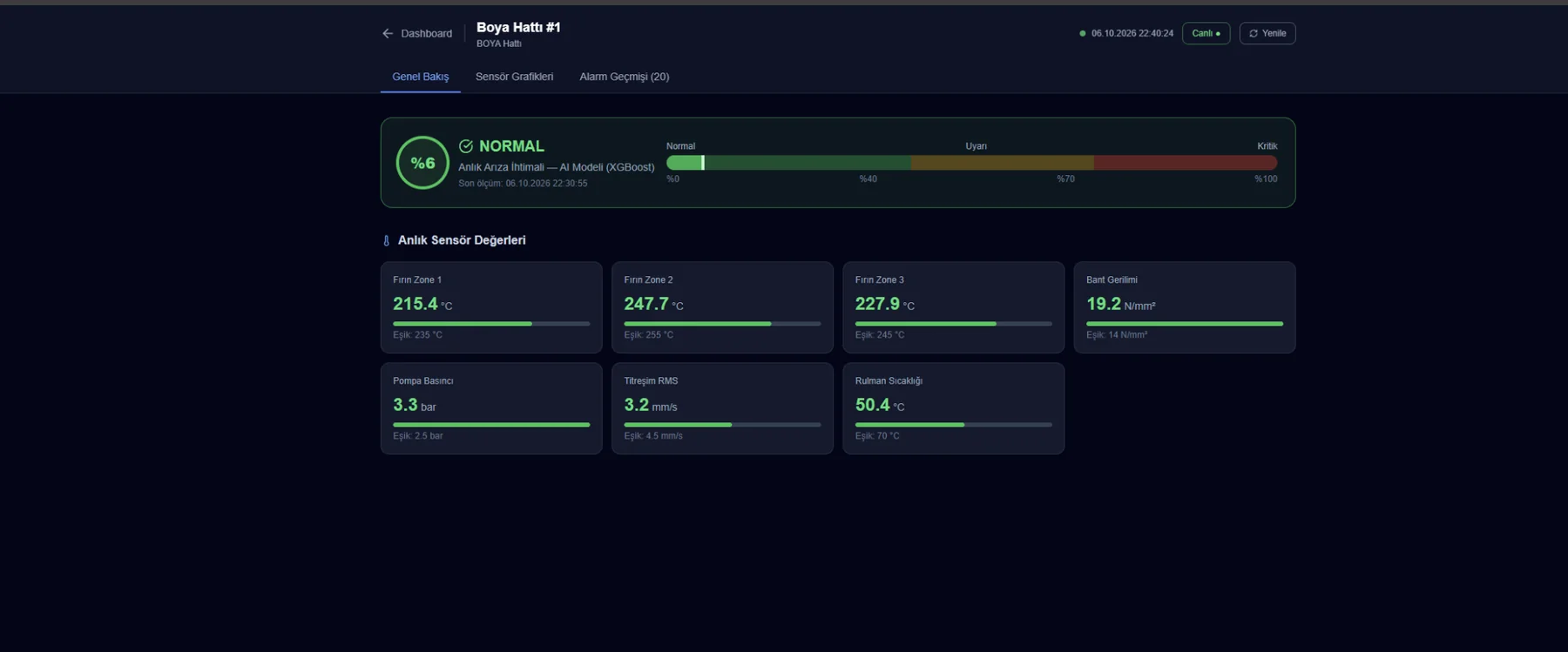
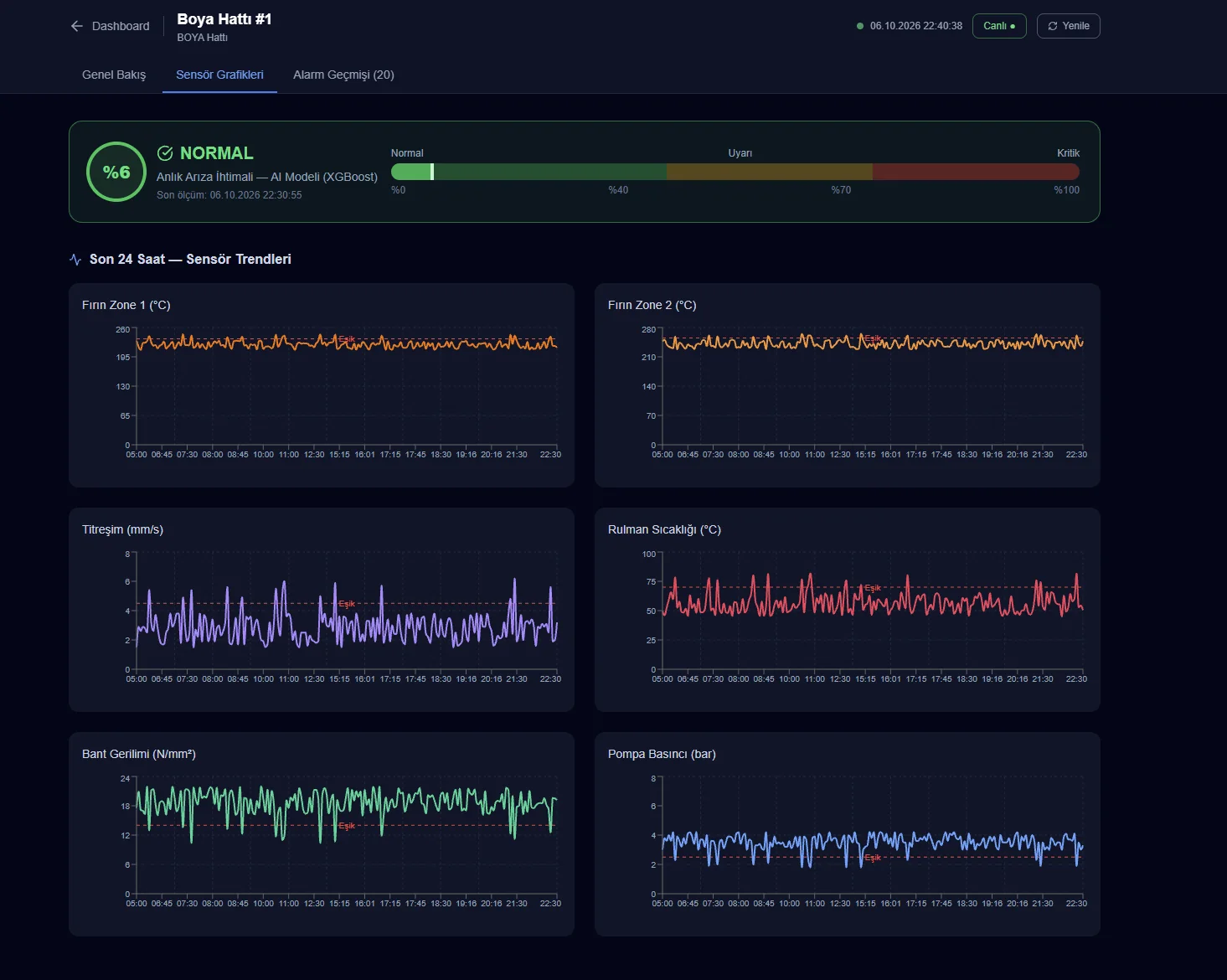
The goal was not to stop at machine-learning performance. I built the full path from sensor generation and inference to risk classification, alerts, automated work orders, planned maintenance and a live operational dashboard.
Problem
Reactive maintenance waits for equipment to fail. This project explores a different path: continuously evaluate multivariate machine signals, surface failure risk earlier, and connect the prediction directly to a usable maintenance workflow.
Role & ownership
I independently designed and built the complete system — architecture, React frontend, PHP REST API, Python/FastAPI ML service, XGBoost model, database design, synthetic data logic and deployment.
Four layers. Clear responsibilities.
The application layers are deliberately separated so the data source and model can evolve without forcing the interface, business logic and storage layers to be rebuilt.
Real industrial context, synthetic training data.
Because real failure data is commercially sensitive and difficult to access, the model is trained on synthetic data. The feature space is still designed around industrial parameters from painting, alkaline and Tandem/PLTCM processes: temperatures, vibration, pressure, current, torque and related machine signals. The live system generates new readings for six machines every 10 seconds.
Calibrated uncertainty over artificial perfection.
Early deterministic labels produced an unrealistic result close to 99% accuracy. I introduced a grey zone around critical thresholds so ambiguous cases remain ambiguous, creating a more realistic classification problem and better probability calibration.
Model comparison
| MODEL | ACC. | AUC | RECALL |
|---|---|---|---|
| Logistic Regression | 74% | 0.821 | 71% |
| SVM | 77% | 0.876 | 79% |
| Random Forest | 79% | 0.901 | 83% |
| XGBoost | 81% | 0.922 | 87% |
Selected model: XGBoost
From prediction to maintenance action.
A critical risk is not just a red card on a dashboard. It enters the maintenance workflow: the system can create a work order automatically, while users can assign, update and close work orders and track planned maintenance in the same product.
The working product surface
Constraints & next steps
The application is live-deployed, but the model is trained on synthetic data. A field deployment should replace the simulator with a SCADA/Modbus adapter, retrain against real failure distributions and validate workflows with maintenance engineers.